

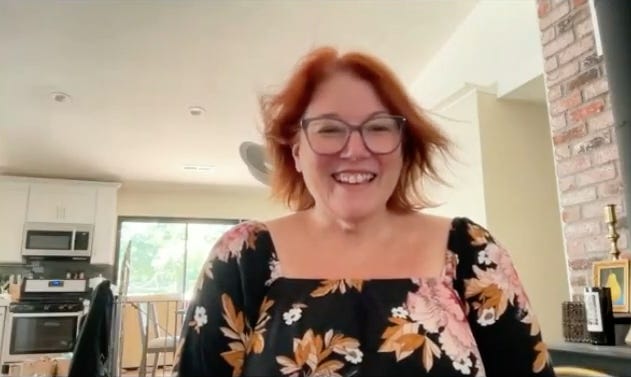
There I am.
Sitting on Zoom on my 61st birthday, laughing, talking about technology, vibe coding, and the little web app I’ve been building.
If you only saw the screenshot, you might think this was a conversation about launching an app.
It was.
But it was also a conversation about what happens when the life you expected to have changes.
About beginning again when you absolutely did not have “begin again” written anywhere on your calendar.
And about the strange way something built during one of the hardest seasons of my life became something I now believe can help other women find their way through theirs.
That something is Lantern.
And I didn’t begin building it because I had a brilliant startup idea.
I began building it because I needed it.
“I didn’t start with an app idea. I started with a life I suddenly had to figure out how to live differently.”
The question I couldn’t answer
I had been with my husband for 30 years.
Married for 24 years and seven months.
We had built a life together. Raised a child. Accomplished things together. Shared history that doesn’t simply disappear because a relationship changes.
And then I found myself separated.
Suddenly, I was looking at parts of life I hadn’t needed to think about in decades.
Dating was one of them.
At one point, someone I was dating asked me a very simple question:
“What do you like?”
And I realized...
I didn’t really know how to answer him.
It wasn’t because I didn’t like anything.
It was because I had spent so much of my adult life thinking about everyone else’s needs, everyone else’s wants, everyone else’s comfort, that somewhere in there I had stopped asking myself the question.
What do I want?
That’s a startling realization when you’re a grown woman.
And I don’t think I’m the only woman who has had it.
Sometimes it happens after divorce.
Sometimes after the kids leave.
Sometimes after retirement.
Sometimes after losing someone.
Sometimes there isn’t one giant life event at all.
You simply wake up one day and realize you’ve become very good at taking care of a life without necessarily checking whether it still feels like yours.
“Sometimes the hardest question isn’t ‘What should I do?’ It’s ‘What do I actually want?’”
The moment Lantern really began
Around this time, a longtime friend asked me to test a custom GPT she was developing.
So I started talking to it.
At first, I asked questions.
Then I started putting pieces of my life into it.
A conversation I couldn’t stop replaying.
Something kind a friend had said.
A screenshot of a text.
A moment that made me happy.
Something that hurt.
Something that confused me.
Without intending to, I started creating a journal of my recovery from my marriage ending.
And over time, it started becoming something else.
I began developing the prompts.
Adding my methodologies.
Thinking about communication and patterns and the way we tell ourselves stories when we don’t actually have all the facts.
And one day I realized:
This shouldn’t only be something I use.
This is an app.
Because our brains are magnificent storytellers
You’ve probably done this.
Someone doesn’t answer your text.
There’s silence.
And your brain promptly writes a three-act screenplay explaining exactly what the silence means.
They don’t care.
You said something wrong.
They’re upset.
You’ve embarrassed yourself.
The relationship is over.
Meanwhile, the actual fact might be:
They haven’t answered yet.
That’s it.
But when we’re activated, hurt, lonely, frightened, or already carrying old experiences into a new situation, separating the fact from the story can be incredibly difficult.
That became one of the foundations of Lantern.
Not:
Let AI tell me what to do.
But:
Help me slow this down enough to see what is actually happening.
What do I know?
What am I assuming?
What am I feeling?
Where am I feeling it?
What pattern might be showing up?
What do I want to communicate?
What boundary do I actually need?
And what is mine to decide?
Because the fundamental belief underneath Lantern is this:
You are still the person who knows your life best.
“Lantern isn’t here to become the authority on your life. It’s here to help you hear your own authority again.”
Then my birthday gave me the perfect real-life test
Just before my birthday, I had an experience that gave me a very good example of why I built this.
I was planning a small gathering.
I’d had a rough week, and I wanted to spend my birthday with people who made me feel good.
Simple enough.
Then someone I’d invited asked if they could bring another person.
The problem?
I had deliberately created distance from that person because of previous behavior that didn’t feel healthy for me.
I had already communicated that.
So when I was asked whether this person could come to my birthday celebration, I was stunned.
Then hurt.
Then angry.
My very human first reaction was essentially:
Are you kidding me?
Why would you ask me this?
Did you not listen when I told you what happened?
How could someone who cares about me put me in this position?
There were a lot of feelings.
Which meant it was exactly the wrong moment to try to write the perfect response.
So I took it to Lantern.
Not to have Lantern decide who should attend my birthday party.
That’s important.
I took it there so I could untangle my own reaction.
And underneath all the anger and confusion, I eventually found the sentence that mattered:
I need to spend my birthday with people around whom I feel emotionally happy and safe.
Oh.
There it was.
The boundary wasn’t really about proving somebody else had behaved badly.
It was about recognizing what I needed.
Once I had that, I didn’t need a prosecuting attorney’s closing argument.
I didn’t have to demonize anyone.
I didn’t have to convince them that my boundary was correct.
I could simply communicate it.
That is the work I want Lantern to help women do.
Why it’s called Lantern
I don’t want an app telling women which path to take.
I want to help women see the path that’s already underneath their feet.
That’s why I called it Lantern.
Think about what a lantern actually does.
It doesn’t give you a map of your entire life.
It doesn’t drag you toward the destination.
It doesn’t say:
Go left. Marry him. Leave her. Take the job. Quit the job. Send the text. Don’t send the text.
It simply holds up enough light for you to see what is immediately in front of you.
Sometimes that is what we need most.
Not somebody else’s answer.
Not a five-year plan.
Not another person telling us what we “should” do.
Just enough light to see our own next step.
“A lantern doesn’t walk the path for you. It gives you enough light to recognize where your next step actually is.”
And then something extraordinary happened
I built it.
Not perfectly.
Not completely.
Not after spending a year developing every possible feature.
I built a minimum viable version.
I experimented with different platforms.
I used vibe coding.
I changed things.
I rebuilt things.
I learned things I didn’t know before.
And instead of waiting until Lantern matched some imaginary perfect version in my head, I let people use it.
My first goal was modest.
Five beta testers.
I got twelve.
And that’s when the project became real.
Because suddenly other women weren’t simply telling me that Lantern sounded like a good idea.
They were actually using it.
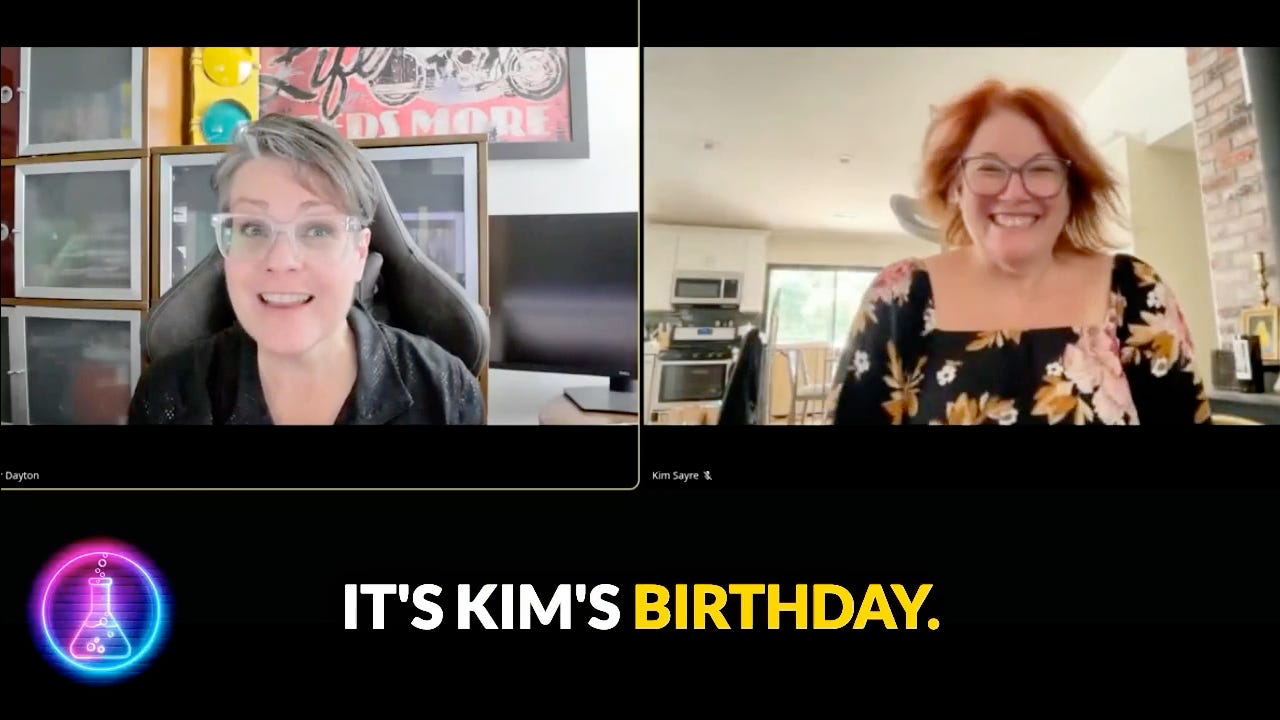
One of those women was the person interviewing me in the conversation pictured above.
She had experienced the death of someone deeply important to her, followed by another painful situation involving belongings she had stored with him.
There were layers of grief, anger, loss, confusion, and things she didn’t necessarily want to keep unloading onto another human being.
She took some of that to Lantern.
And during our conversation, she described Lantern as her “bestie.”
That stopped me for a minute.
Because this was no longer just the tool I had built to help me process my own life.
Someone else had found a place inside it to work through hers.
No, Lantern isn’t therapy
I want to be very clear about this.
Lantern is not a therapist.
It is not crisis care.
It is not a replacement for professional mental-health support.
And it certainly is not a replacement for the people we love.
There are moments when we absolutely need another human.
But there are also a tremendous number of moments that happen between those moments.
At 6:00 in the morning when you’ve already replayed yesterday’s conversation fifteen times.
After the text message.
Before the phone call.
When you’re trying to figure out what you actually want to say.
When you know you’re triggered but can’t quite tell why.
When you’re afraid you’re overreacting.
When you simply need somewhere to put the messy first draft of the thought.
That’s where I see Lantern living.
A private place to untangle.
To reflect.
To notice.
To practice the conversation before having the conversation.
And ultimately, to come back to yourself.
Maybe 61 isn’t the age for having everything figured out
There’s something particularly wonderful to me about sharing this story on my birthday.
Because I’m 61 now.
And I’m building an app.
I’m learning new technology.
I’m experimenting with AI.
I’m launching things before they’re perfect.
I’m dating after not dating since before smartphones.
I’m learning new vocabulary I didn’t know I needed to know.
Breadcrumbing?
Left on read?
Apparently there was homework.
I’m laughing about it now.
But I’m also realizing something.
We talk about reinvention as though you’re supposed to throw away the life that came before and manufacture an entirely new one.
I don’t think that’s what I’m doing.
I’m bringing it all with me.
My degree in sociology.
My work as a coach.
Photography.
Brand strategy.
Communication.
Relationships.
Motherhood.
Marriage.
Friendship.
Divorce.
Heartbreak.
The things I did well.
The things I wish I’d done differently.
The things I’m still learning.
It’s all in the room with me while I build this.
Maybe that’s what reinvention really is.
Not starting from zero.
Finally realizing how much material you already have to build from.
This is only the beginning of Lantern
The current Lantern is not the final Lantern.
I hope it never really is.
I’m building it alongside the women using it.
I’m watching where it helps.
I’m listening when something doesn’t.
I’m seeing what women keep coming back to.
I’m learning which conversations they need help untangling and which tools make it easier for them to find their own clarity.
That means becoming part of Lantern right now isn’t simply subscribing to another app.
You’re arriving while we’re still shaping what this can become.
And if you’re in one of those seasons where something in your life is changing...
A relationship.
A marriage.
A friendship.
Your work.
Your body.
Your family.
Your identity.
Or simply the way you want the next chapter of your life to feel...
I built Lantern for moments like these.
Not to tell you what happens next.
To help you hear yourself clearly enough to decide.
Bring me the messy thought, the confusing text, the conversation you’re rehearsing in your head, or the thing you can’t quite name yet. We’ll untangle it together.